Factory acceptance test for marine cranes: what to check
November 11, 2026
Every crane that goes to sea meets the same opponent: salt. It settles on paint, creeps into joints and works its way into hydraulics and electrics, day after day. “Fully marinized” is a phrase used for equipment that was made to live with it, not protected against it after the fact.
The phrase is a description, not a certificate, so a marinized crane means something only once you list what it covers. This article sets out what the term should include, what HEILA Cranes applies to every crane it builds and what the optional HD4+ package adds, and which questions help you compare offers.
What a marinized crane is
Marinisation is the design, redesign or testing of a product so that it can work at sea, most often so that it survives long term in salt water conditions. For a crane that definition has two layers. The first is materials and coatings: what each part is made of and how it is protected. The second is design: where water and salt can collect, and how easy it is to protect and maintain the part afterwards.
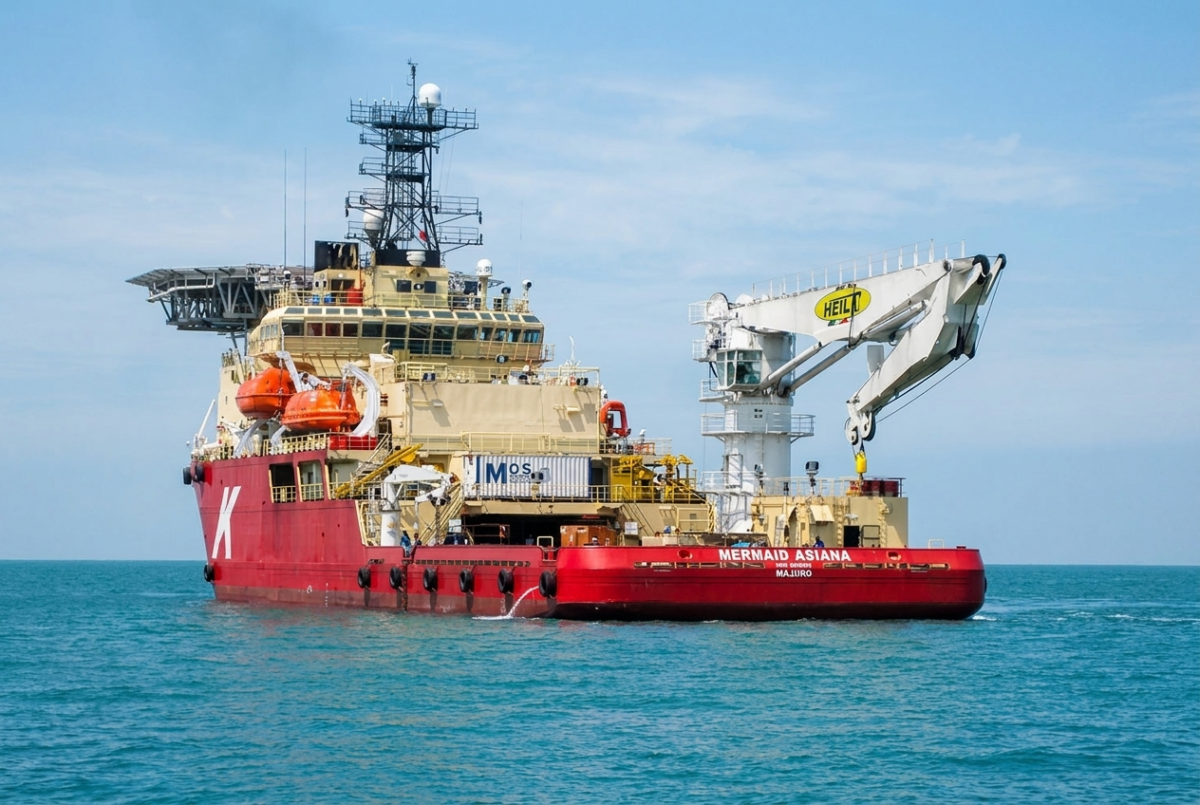
That is why the difference between a crane built for the sea and one adapted for it matters. Protection added later can only sit on top of choices made for another environment. At HEILA each crane component is selected and designed for heavy duty operation in a marine environment, and every crane is engineered in house with 3D CAD and verified ANSYS software and FEA. Protection is part of the design, not an extra coat.
Structure and paint
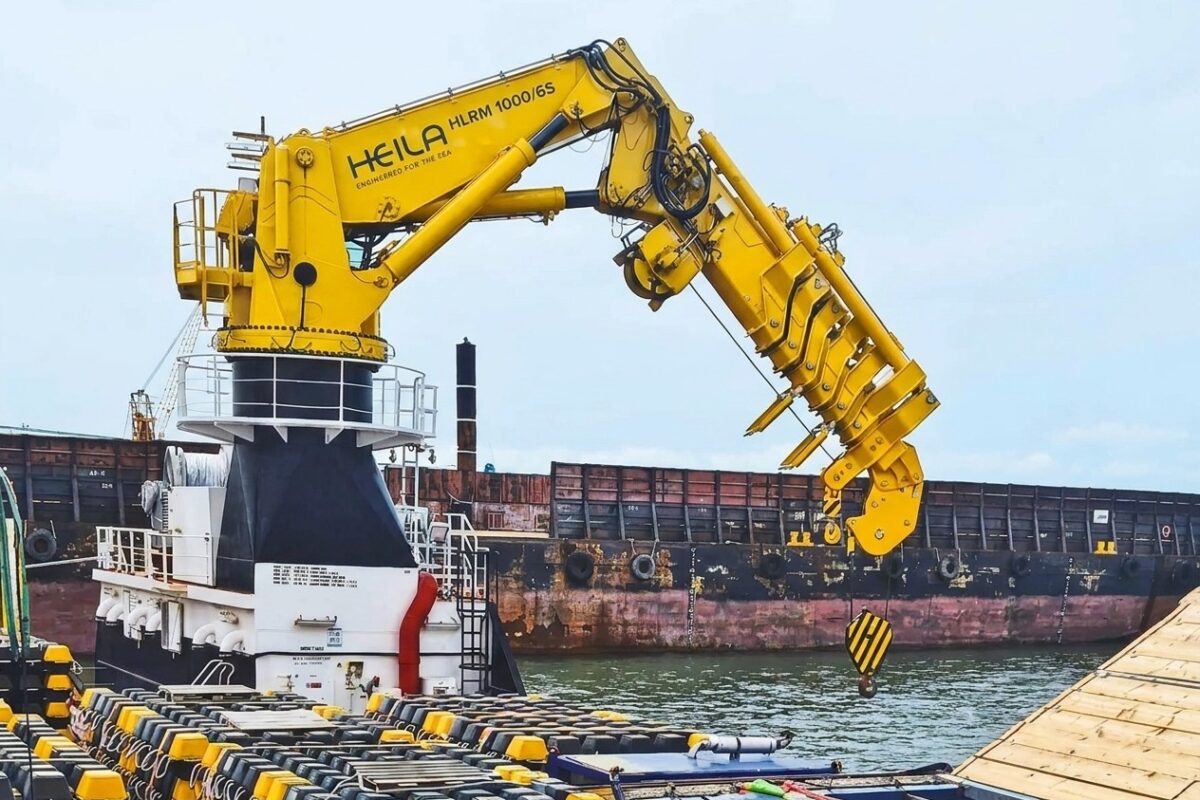
The structure comes first because it is the largest surface. The HEILA Anti-Corrosion Program, applied to all the cranes it manufactures, starts with structural design, steel preparation and rounded edges, which hold paint better than sharp ones. The steel is thoroughly sand blasted before a marine paint system is applied.
The standard paint system complies with ISO 12944-5 C5 Very High and ISO 12944-9 CX Offshore. The standard colours are RAL 1005 Honey Yellow with RAL 7021 Black Grey, and topcoats are available in any customer specified RAL colour. Where the specification asks for it, HEILA also offers paint systems compliant with NORSOK M-501, isocyanate free systems and customer specific systems. Zinc and aluminium can be thermally sprayed onto the structural steel parts on request, and steel structure metallization to NORSOK 2B is available as an option with the HD4+ package.
Cylinder rods, pins and bolts
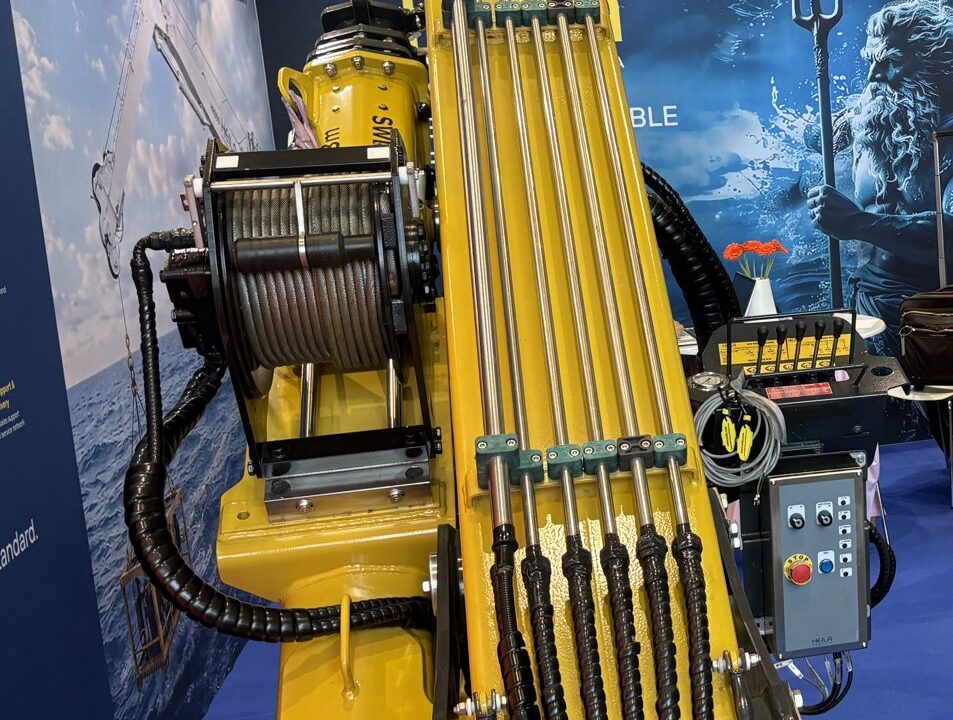
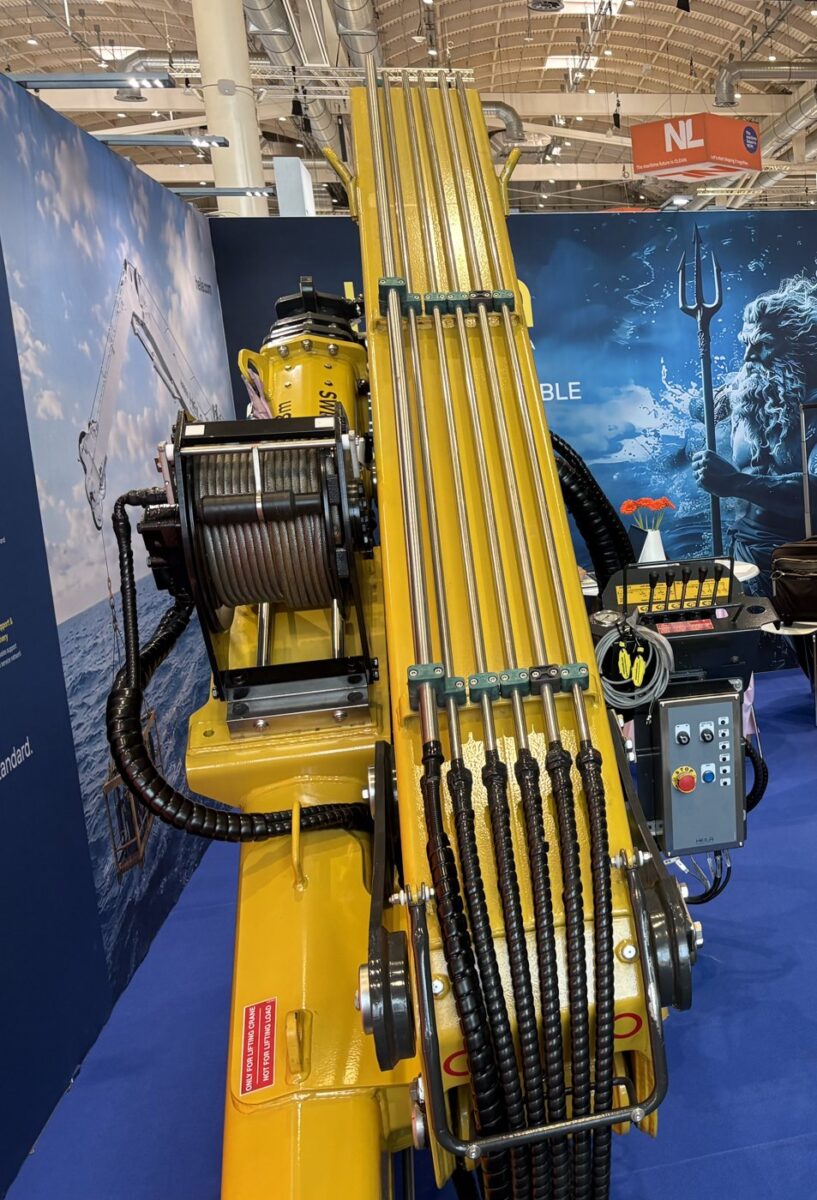
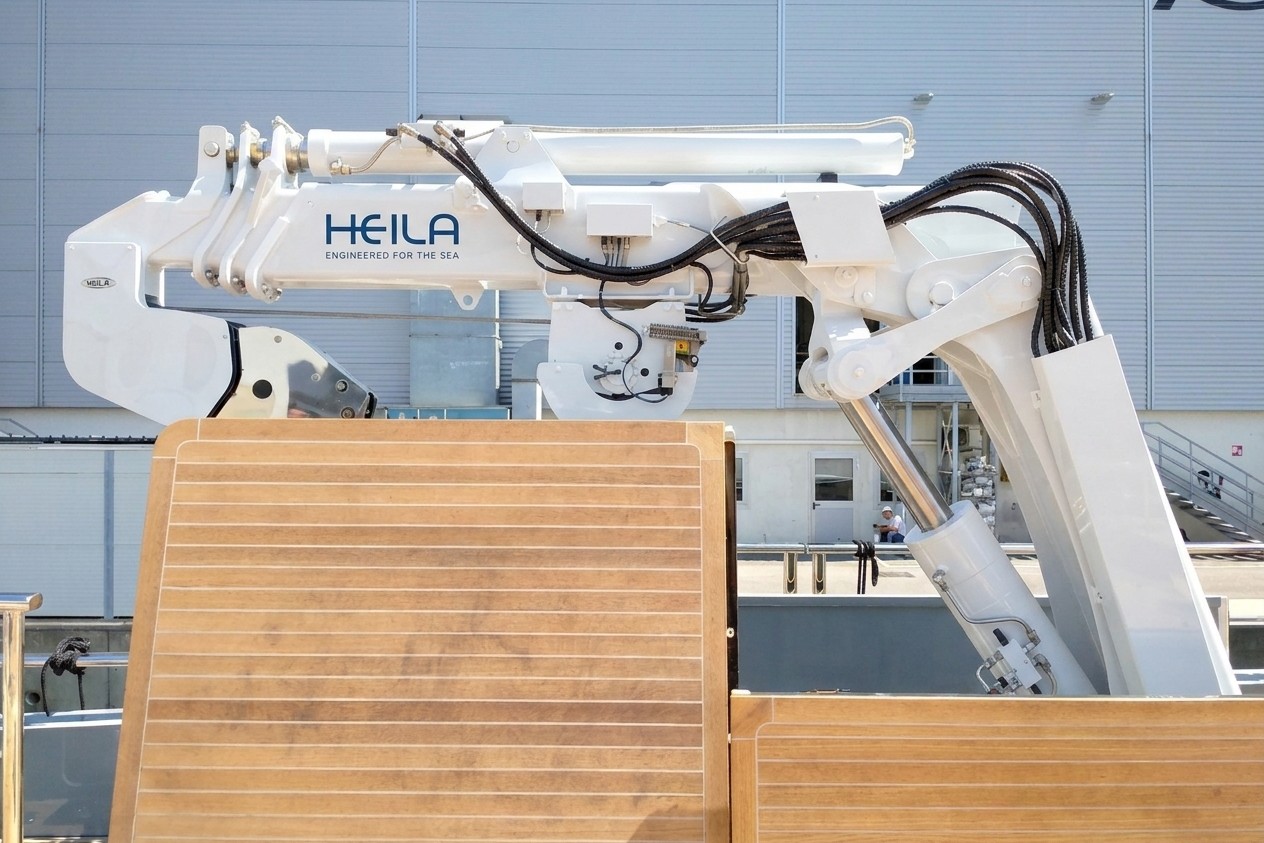
Moving parts are where protection is hardest to keep. HEILA specifies nickel-chrome or double crossed plating for hydraulic cylinder rods, with Nikrom as an option. Pins are made of high strength stainless steel AISI 630, structural bolts carry a Geomet 500 grade B coating, and other screws and bolts are stainless steel protected with silicone.
For the harshest conditions the HD4+ package adds a special high hardness treatment on the cylinder rods. It is rated for more than 2,500 hours of neutral salt spray without rust, with no microcracks and no porosity, and it helps protect against leaks, coating peeling and seal wear.
Hydraulics, electrics and cold or hazardous areas
Rigid pipes and their fittings are AISI 316 stainless steel. Hydraulic fittings in galvanized carbon steel are further protected by a film of corrosion resistant inhibitor and covered with rubber tape, while gearboxes, motors and hydraulic manifolds are painted and given the same inhibitor film. HD4+ adds hose fittings in AISI 316L.
On the electrical side every cabinet and junction box on the crane has a minimum protection of IP56. Junction boxes and encoders are AISI 316 stainless steel with IP66, and with HD4+ the electric components inside the junction boxes are protected by silicone spray. The standard design temperature is -20°C to +45°C, and special low temperature steel with cold weather packages is available for Arctic conditions. For hazardous areas HEILA offers ATEX and NEC505 execution, with a dedicated EX-ATEX Declaration of Conformity.
Protection also has to be maintained. Heila cranes have greasing points on all pins and pivot points, with a manual central greasing system as an option and an automatic system on request. When a crane has been at sea for years, our refurbishment programme includes a new anti-corrosion treatment, together with a new warranty period.
Standard program or HD4+
The Anti-Corrosion Program is standard on every crane. HD4+ is the package for cranes that need further protection from the marine environment. The table sets out what each one covers. Our earlier note on the Anti-Corrosion Program gives the short version.
| Area | Anti-Corrosion Program (all cranes) | HD4+ adds |
|---|---|---|
| Structure | Sand blasting, rounded edges, marine paint system to ISO 12944 | Steel structure metallization to NORSOK 2B, as an option |
| Cylinder rods | Nickel-chrome or double crossed plating | Special high hardness treatment, more than 2,500 hours of salt spray |
| Pins, bolts, pipes | AISI 630 pins, Geomet bolts, AISI 316 rigid pipes and fittings | Hose fittings in AISI 316L |
| Electrics | IP56 minimum, AISI 316 and IP66 junction boxes and encoders | Silicone spray on the electric components inside junction boxes |
Questions to ask about any marinized crane
Because the term has no single definition, the same list is worth asking of every supplier:
- Which paint system is used, and which standard does it comply with?
- What protects the cylinder rods, and how many hours of salt spray is it rated for?
- Which materials are used for pins, bolts, pipes and fittings?
- What is the protection rating of cabinets, junction boxes and encoders?
- Are Arctic or hazardous area versions available if the vessel needs them?
- How is the protection maintained and renewed during the life of the crane?
Key takeaways
- “Fully marinized” is a description, not a certificate: it means something only when the coverage is listed.
- A crane designed for the sea builds protection into the structure, the paint, the moving parts and the electrics.
- HEILA applies its Anti-Corrosion Program to every crane, with the optional HD4+ package for extreme marine environments.
- Compare offers on the same six questions: paint standard, rods, materials, protection rating, environment and renewal.
Planning your next crane
Tell us the vessel, the duty and the environment, and our engineers will list the protection that applies to your crane. Use the Request a Quote page or write to sales@heila.com. If you are still choosing the range, start from our HLM series article.