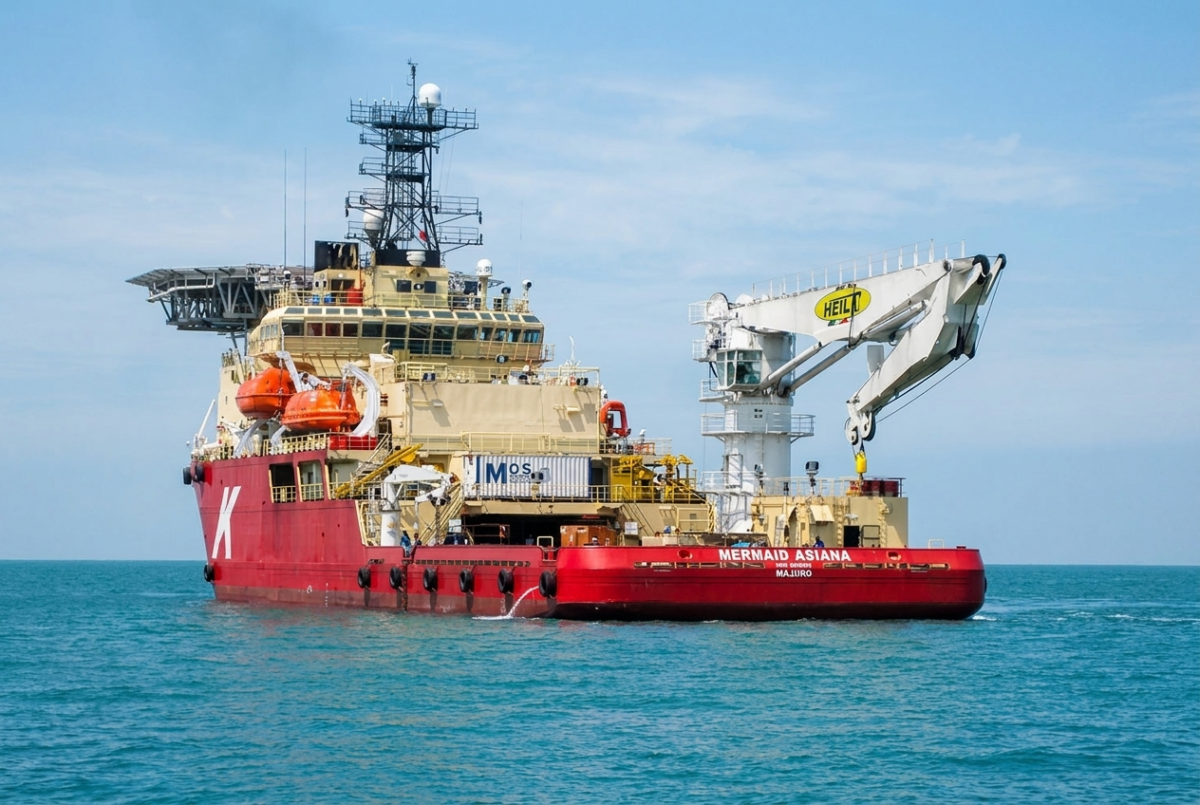
AOPS and MOPS: overload protection for offshore cranes
October 30, 2026
What fully marinized means for a marine crane
November 11, 2026
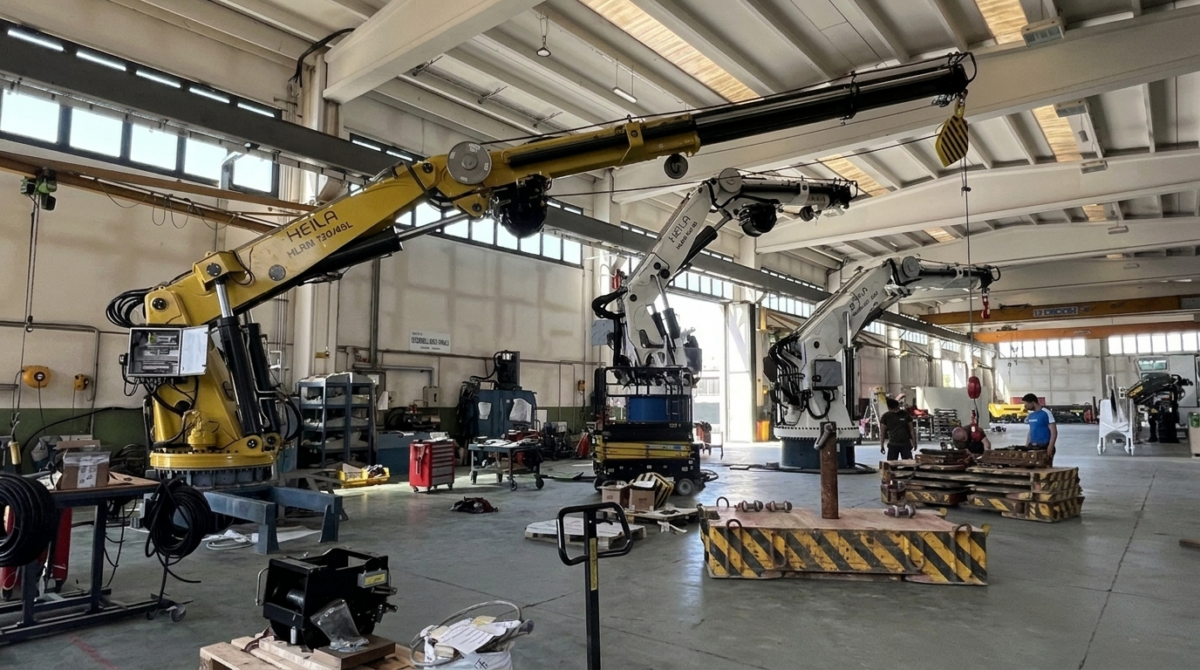
A marine crane is sold on a load chart and accepted on a deck. Between the two sit two moments that decide whether the figures on paper hold in practice: the factory acceptance test, known as FAT, and the commissioning on the vessel. Both are often treated as paperwork at the end of a project. They are better treated as part of the specification.
This article explains what a factory acceptance test covers, who can witness it, what commissioning adds once the crane is on board, and which questions are worth asking before either one takes place.
What a factory acceptance test is
A factory acceptance test is the final check of a crane at the manufacturer, before it ships. At HEILA Cranes every crane goes through a final adjustment and preparation phase before FAT. It is where engineering, production and quality control come together to verify details, functions and operational readiness before the customer inspects the crane.
The test is the end of a longer chain, not a separate event. HEILA designs its cranes with 3D CAD and verified ANSYS software and FEA to check structural integrity, builds them in production dedicated to marine and offshore cranes, and uses digital inspections and functional testing along the way. The factory acceptance test is where that work is shown on a working crane.
The customer is not the only party that can be present. A classification society can witness the test as well. HEILA cranes are certifiable under ABS, BV, CCS, DNV, LR and RINA, among others, on request, and have been tested and approved with societies such as BV and LR. Who attends and what is checked follows from the specification and the society involved, so it is worth settling before the crane is built rather than the week before the test.
What commissioning adds
The factory test proves the crane in the workshop. Commissioning proves it on the vessel, with the crew and the shipyard team. The activities HEILA lists for this phase are alignment, system integration, safety validation, load testing, documentation and operational handover.
Each one answers a practical question. Is the crane aligned with the deck it will work on? Do its controls work together with the vessel’s systems? Do the safety functions respond as specified? Does it handle the load it is rated for? Is everything documented, and is the crew ready to take over? Commissioning can also include calibration, optimisation and control adjustments on board. That fine tuning is part of the work, not a sign that something went wrong.
Be careful with what a load figure means when it is checked. Load chart values are horizontal loads, lifting by hook, in harbour conditions, as our guide on how to read a marine crane load chart explains. Offshore duty brings the significant wave height into the lift plan, so a result obtained at the quay does not automatically describe offshore performance.
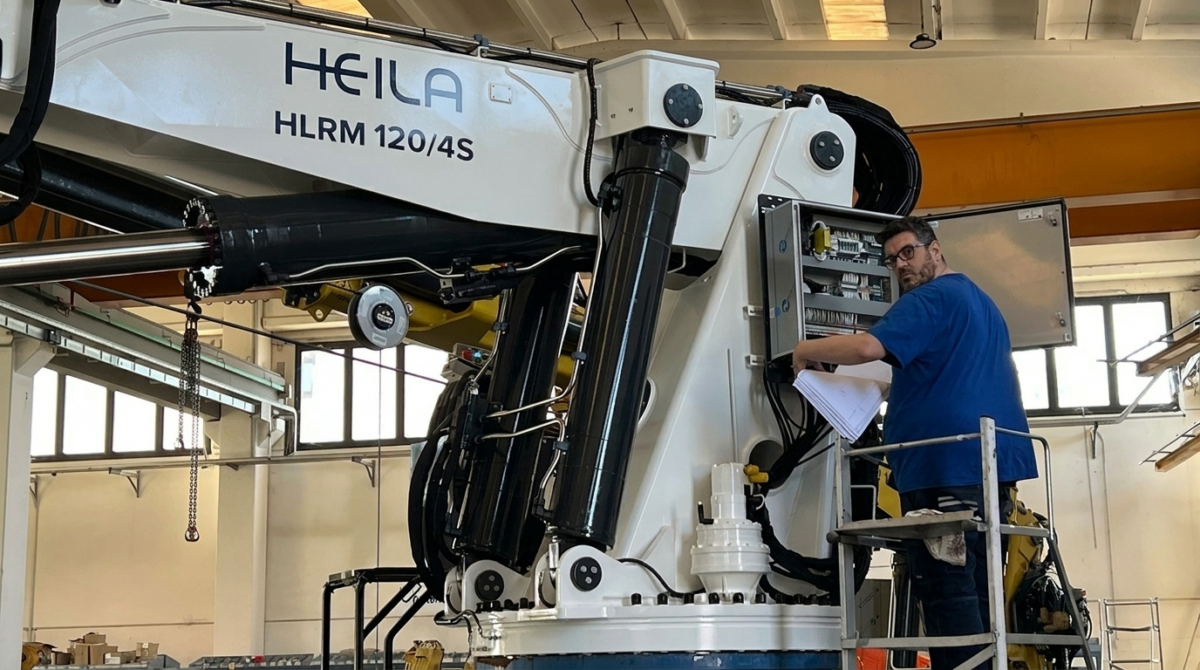
Support does not end at handover. HEILA and its service partners provide technical support, on-site repairs, installation, commissioning, complete refurbishment, remote assistance and original spare parts worldwide. Critical spare parts for standard cranes are held in stock in Italy, the spare parts ticket service gives feedback within 48 hours, and the refurbishment programme covers everything from component repairs to full crane refurbishment.
Safety functions worth seeing at work
A test is most useful when it shows the functions your specification depends on. Acoustic and visual alarms show a green, yellow and red light at 90%, 100% and 110% of the safe working load, and they are mandatory on fully IACS certified cranes. Load and radius indicators can be supplied on portable units or screens. HLRM heavy duty cranes carry an electronic safety system against overload, while HLM cranes use an electrohydraulic load moment limiting device and counterbalance valves mounted on each cylinder.
On offshore cranes performing ship-to-ship or ship-to-platform lifts, AOPS and MOPS overload protection is mandatory, and a sea state selector switch lets the operator work safely in different sea conditions. If these are in your specification, ask to see them respond before the crane leaves the factory, and again on board.
Questions to ask before the test
Six questions settle most of the planning:
- Who will witness the test: the customer, a classification society, or both?
- Which standard applies, such as ISO 19354, with EN 13852-1 or API-2C where the specification requires them?
- Which society certifies the crane: ABS, BV, CCS, DNV, LR or RINA?
- Which conditions do the results refer to: harbour duty or offshore duty?
- Which safety functions will be shown working?
- Which documents come with the crane at handover, and who supports it afterwards?
Key takeaways
- A factory acceptance test is the final check of a crane at the manufacturer, before it ships.
- A classification society can witness it, and the scope follows from the specification.
- Commissioning proves the crane on the vessel: alignment, system integration, safety validation, load testing, documentation and operational handover.
- Load chart figures are horizontal loads in harbour conditions, so say which conditions a result refers to.
- Settle the witnesses, the standard, the society and the safety functions before the crane is built.
Planning your acceptance tests
Tell us the vessel, the duty, the standard and the classification society, and our engineers will plan the test and the commissioning with you. Use the Request a Quote page or write to sales@heila.com.