
HEILA Cranes at Europort Istanbul 2026
October 17, 2026
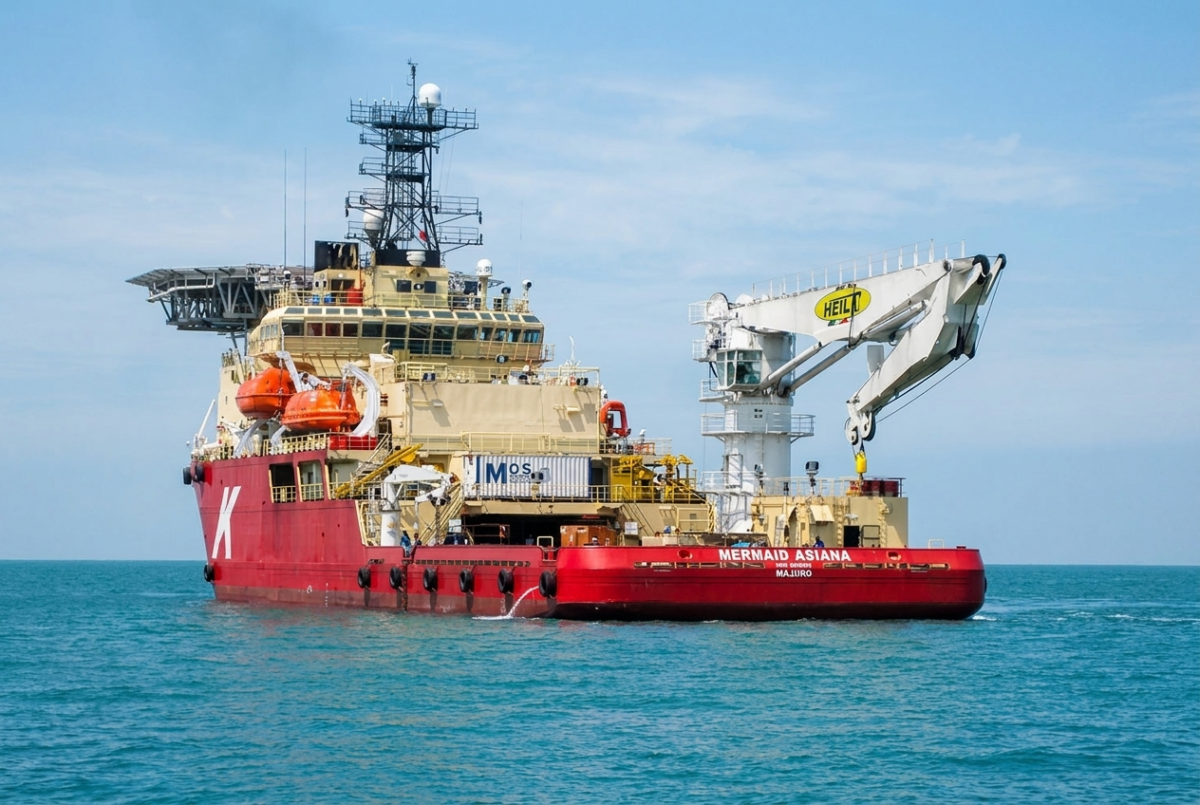
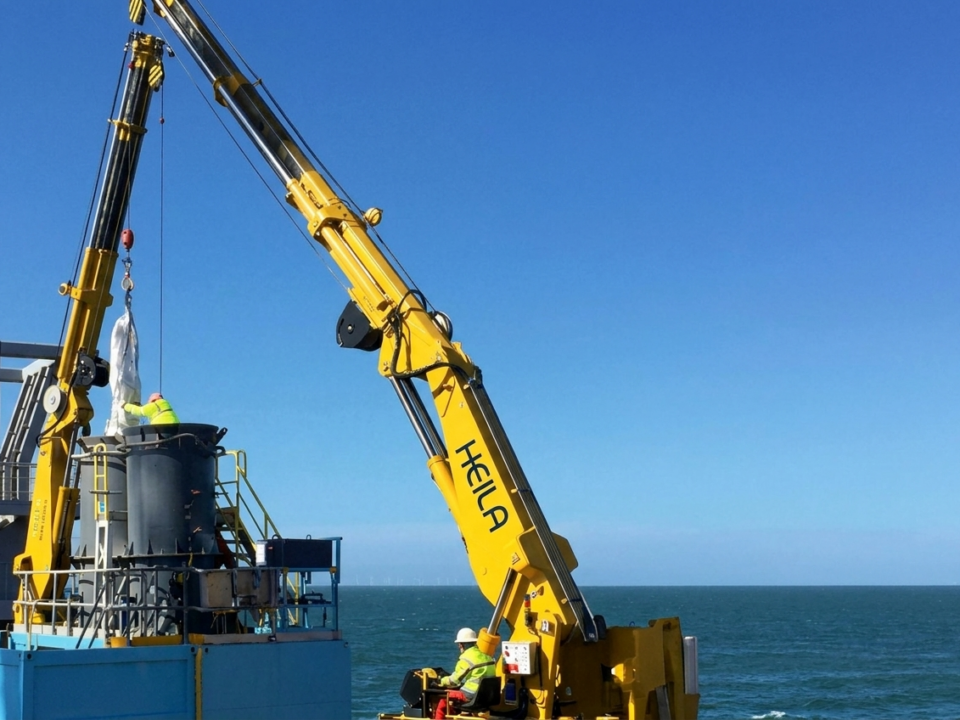
A lift from a supply vessel to a platform, or from one ship to another, is never made from a fixed point. Both ends of the operation move, and a load that is resting on a deck one moment can be caught, snagged or held the next. When that happens, the crane meets forces it was not set up to take: overload on the hook and overturning moment on the structure.
This is the situation AOPS and MOPS are designed for. Both are overload protection systems for offshore cranes, and both exist to stop a lift that has gone wrong from damaging the crane, the vessel or the people around it. They differ in one essential point: who responds, the system or the operator.
What AOPS and MOPS do
AOPS stands for automatic overload protection system. It protects the crane against overload and overturning moment by letting the hook be pulled away in a controlled manner. The response does not wait for anyone: when the limits are reached, the system acts.
MOPS stands for manual overload protection system. It warns the operator, who then operates the winch release manually. The protection is still there, but the decision and the action sit with the person at the controls.
Both answer the same question, how to let go of a load safely when holding on would cost more, with a different balance between automation and operator judgement. The table sets the two side by side.
| AOPS | MOPS | |
|---|---|---|
| Full name | Automatic overload protection system | Manual overload protection system |
| What triggers the response | The system, automatically | A warning to the operator |
| What happens next | The hook is pulled away in a controlled manner | The operator operates the winch release |
| Protects against | Overload and overturning moment | Overload, through operator action |
When overload protection becomes mandatory
AOPS/MOPS is mandatory for certified offshore cranes performing ship-to-ship or ship-to-platform lifts. That makes it a specification question, not an accessory to add later: the moment a crane is expected to work between two moving units under certification, overload protection belongs in the first draft of the requirements. Settling it early keeps the crane, the winch and the control system aligned from the start, instead of adapting one to the other at the end.
Certification itself starts from the standards. HEILA cranes comply with ISO 19354, the general requirements for marine cranes, and can be built to EN 13852-1 and API-2C where the specification requires them. EN 13852-1 is the European standard for general-purpose offshore cranes, and its current edition was published in 2025. Cranes are certifiable under ABS, BV, CCS, DNV, LR and RINA, among others, on request.
The rest of the safety chain
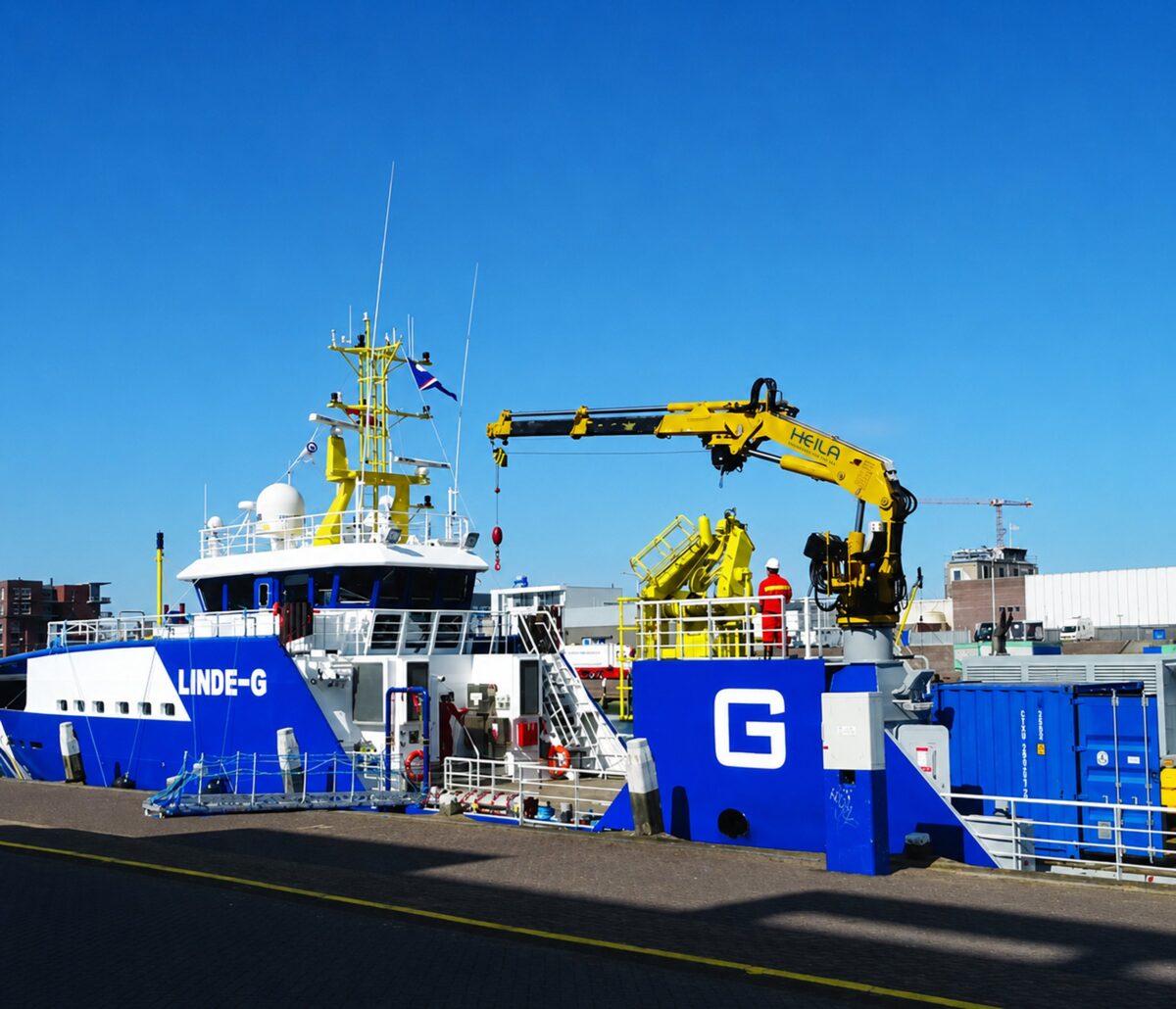
Both systems work alongside other safety functions that tell the operator where the crane stands before a limit is reached. Read as layers, the alarms and indicators give the operator time to react, the load limiting devices keep the crane inside its rating, and AOPS or MOPS answers the case where a load cannot be freed any other way.
Acoustic and visual alarms show a green, yellow and red light at 90%, 100% and 110% of the safe working load, and they are mandatory on fully IACS certified cranes. Load and radius indicators can be supplied on portable units or screens, with visual load indication and 3D controls. Hoisting winches carry a load limiting device of their own.
Duty is part of the picture too. Offshore duty brings the significant wave height into the lift plan, and a sea state selector switch, fixed or wireless, lets the operator work safely in different sea conditions, from harbour duty to offshore duty. On the crane itself, HLRM heavy duty cranes carry an electronic safety system against overload, while HLM cranes use an electrohydraulic load moment limiting device and counterbalance valves mounted on each cylinder.
Where AOPS and MOPS sit in the HEILA range
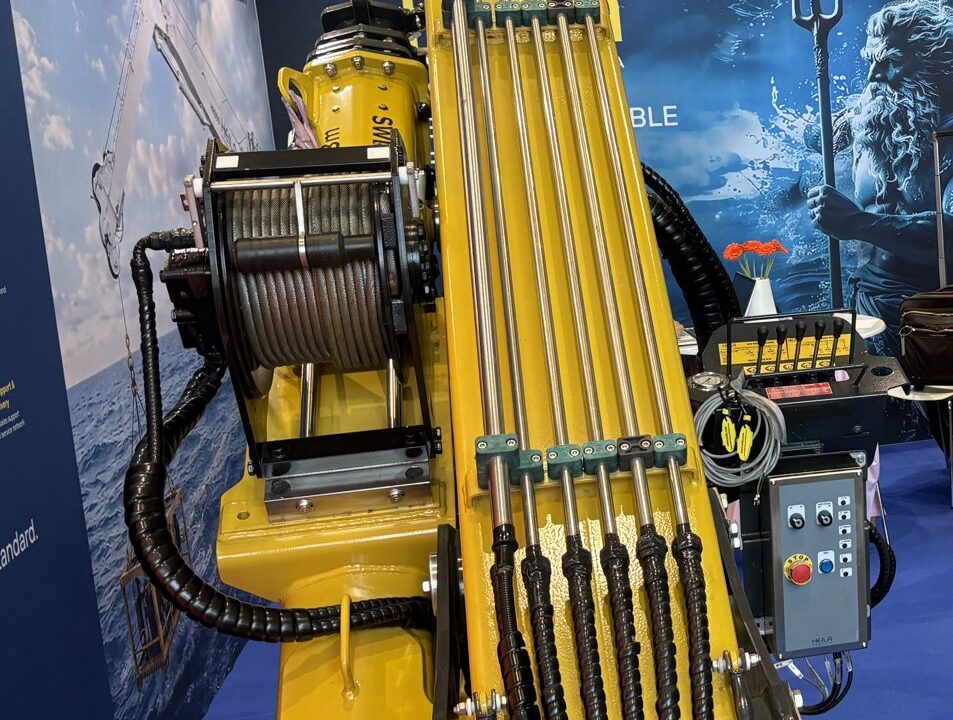
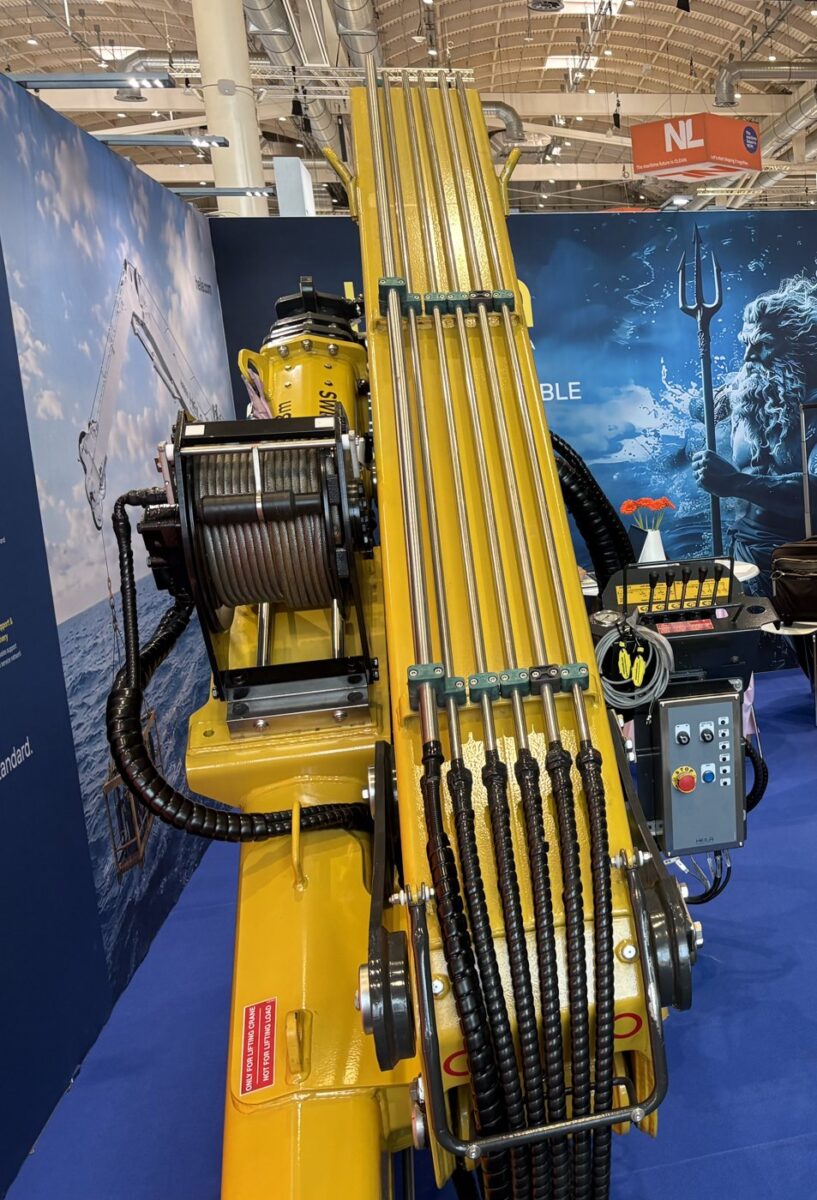
The HR knuckle boom series, devoted to subsea operations, is fitted with active heave compensation, AOPS and MOPS. Our article on active heave compensation covers the first part of that package, and the one on the HR series for subsea work shows the cranes it is built for. On the HLRM 440, the best seller of the knuckle telescopic line, both are available as options alongside personnel lifting, winch, operator cabin, radio control and HPU.
HEILA offers AOPS/MOPS as a turnkey system and builds crane safety and control systems and PLC software in house, supporting them through the crane’s life. If you are still choosing the crane itself, our article on choosing between a foldable telescopic crane and a knuckle telescopic crane covers the configuration side, and our guide on how to read a marine crane load chart explains what the safe working load figures assume.
Key takeaways
- AOPS and MOPS protect an offshore crane when a lift goes wrong: AOPS responds automatically, MOPS warns the operator to release the winch.
- AOPS protects against overload and overturning moment by letting the hook be pulled away in a controlled manner.
- AOPS/MOPS is mandatory for certified offshore cranes performing ship-to-ship or ship-to-platform lifts.
- Alarms at 90%, 100% and 110% of SWL, load indicators and the sea state selector complete the safety chain.
- Overload protection belongs in the first specification, together with the standards and the class society.
Planning an offshore lift
Tell us the lifts you plan, the vessels involved, the duty and the certification you need, and our engineers will match the crane and its protection systems to the operation. Use the Request a Quote page or write to sales@heila.com.